Short answer: for most people, an LED face mask feels like very little. You feel the gentle weight of the mask and the straps, and you see a soft glow through your closed eyelids in the visible modes. A mask resting on the skin can feel slightly warm. Some masks add a soft vibration. It should never sting, burn or hurt. If it does, take it off. Here is what to expect, step by step.
Before your first session

- Read the guide. It is short, and it tells you the session length, how to fit the eye protection and how often to use your mask.
- Charge it fully. Rechargeable masks usually arrive with some charge, but a full battery means your first session will not stop halfway.
- Check you are a good fit for light therapy. If you are pregnant, take medication that increases light sensitivity, or have an eye or skin condition, speak to a doctor first. Our safety checklist has the full list.
- Pick a quiet ten minutes. The sofa or bed is ideal for a first try.
Step by step
- Cleanse and pat dry. No makeup, sunscreen or serum under the mask. Products can get in the way of the light, as a review of light therapy in skin notes.
- Fit the eye protection. Put in the covers or goggles before you switch on.
- Put the mask on and adjust the straps. Snug enough not to slide, loose enough to be comfortable. An even fit matters more than a tight one.
- Close your eyes, then switch on. Choose your mode and let the timer run.
- Relax. Read, listen to something, or do nothing.
- When the timer ends, take it off and apply your usual skincare.
What it actually feels like
The light. With your eyes closed, red light shows as a warm glow through your eyelids. Blue looks cooler and brighter. Near-infrared on its own is invisible, so a near-infrared-only mode can look almost switched off even when it is working. You may just see a faint dull-red glow from those LEDs.
The fit. A flexible silicone mask rests on the face and follows its shape. A hard shell sits over the face. Either way, you are aware of it for the first minute or two, and then most people stop noticing.
Warmth. At-home LED masks work at low power and are not designed to heat the skin. But anything resting on your face, silicone included, can feel slightly warm over a few minutes. Gentle warmth is normal. Heat that feels uncomfortable is not.
Vibration (on some masks). Some masks have small motors that add a soft hum or buzz while the light runs. It is usually adjustable, and it is fine to turn it down or off.
Sound. Apart from any vibration, LED masks are quiet. Some may beep when you switch modes or when the session ends.
What is normal afterwards

- Nothing much. This is the most common experience. Light therapy is gradual, and one session will not change how your skin looks. Harvard Health describes regular use over months.
- Slight pinkness or warmth that fades quickly. The American Academy of Dermatology says the most common side effects of red light therapy are mild, such as temporary irritation.
- Faint strap marks if the straps were tight. Loosen them next time.
When to stop
Take the mask off and do not use it again until you have spoken to a doctor if you notice:
- stinging, burning or pain during the session
- redness, itching or a rash that does not fade within a few hours
- blurred vision, eye pain, spots or flashes, or any change in your vision. Consumer Reports lists these among possible effects of bright light near the eyes. Our eye safety guide has more.
First-session mistakes to avoid
- Opening your eyes to “see if it’s working”. Keep them closed; trust the glow.
- Going longer because it feels nice. Let the timer end the session. Our guide to how often to use a red light mask explains why more is not better.
- Starting with blue at bedtime. Blue light at night affects sleep more than other colors. Start with red.
- Using it on damp skin straight out of the shower.
Your first session with Lumina Pro
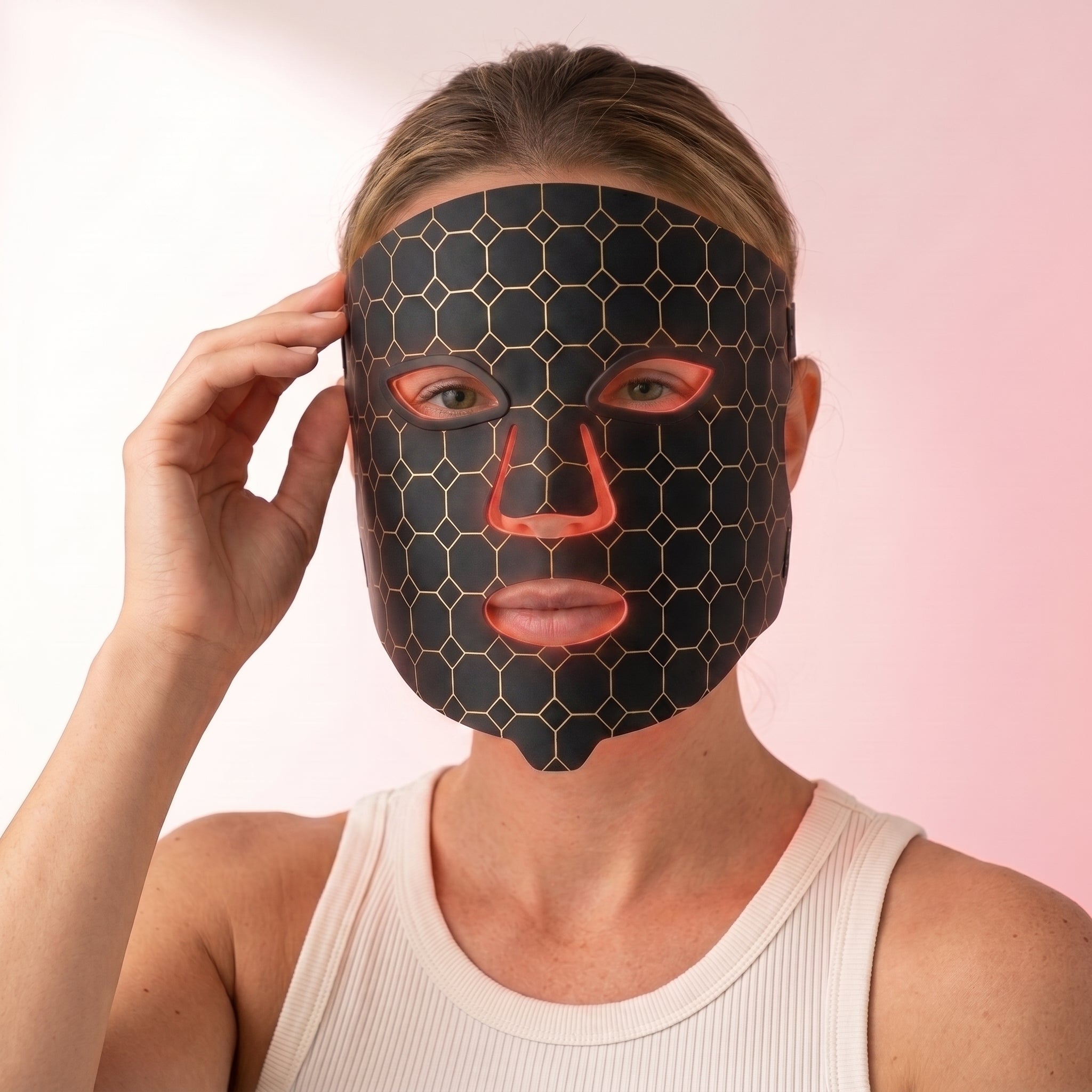
With the Rosune Lumina Pro, charge the controller with the USB-C cable first. Cleanse and dry your face, clip in the two eye covers and hook on the straps. Press power, then M to choose your light: red is a good start. Then relax for the 10-minute session. The silicone weighs about 168 g, and the built-in vibration adds a soft hum, with more than one intensity. Nothing plugs into the wall while you wear it. When it switches off, apply your serum and moisturizer, and wipe the inside of the mask with a soft, slightly damp cloth.
Lumina Pro is a general-wellness device and is not FDA-cleared. It costs $149 with free US shipping and a 90-day warranty.
Frequently asked questions
Does an LED face mask hurt?
No. It should feel like very little: gentle weight, a soft glow and perhaps slight warmth. Stinging, burning or pain means stop.
Does an LED mask get hot?
At-home masks are low powered and not designed to heat the skin. A mask resting on your face can feel slightly warm, which is normal. Uncomfortable heat is not.
Can you talk or move while wearing one?
Usually yes, within reason. Flexible masks with straps stay put while you read or relax. Keep your eyes closed.
Will I see a difference after one session?
No, and you should not expect to. Light therapy is gradual and relies on regular use over months.