Short answer: there is no good evidence that one time of day works better than another. The best time to use an LED face mask is whenever you will do it consistently. Evening suits most people, because skin is already clean and there is nothing to rush. Morning works too, as long as you finish with sunscreen. One exception: if your mask has a blue mode, use it earlier in the day rather than just before bed.
Does timing actually matter?
We looked for research comparing morning and evening use of at-home LED masks and did not find any good-quality studies showing a difference. What the evidence does support is consistency. Harvard Health describes light therapy as something used multiple times a week over months. A routine you keep matters far more than the hour on the clock.
So the real question is not “when works best?” but “when will I actually do it?”
Using an LED mask in the morning

Good for you if: your evenings are unpredictable, you like starting the day with a routine, or you already have ten quiet minutes over coffee.
How to do it:
- Cleanse and pat your skin completely dry.
- Run your session with the eye protection in place.
- Apply your serum and moisturizer.
- Finish with sunscreen. The American Academy of Dermatology recommends a broad-spectrum SPF 30 or higher for daily use. LED masks do not use UV light, but daily sunscreen is good practice anyway.
- Apply makeup last, if you wear it.
Watch out for: rushing. If mornings are a scramble, a mask easily gets skipped.
Using an LED mask at night
Good for you if: you wind down in the evening, you remove makeup before bed anyway, or you like to pair the session with a book or a show.
How to do it:
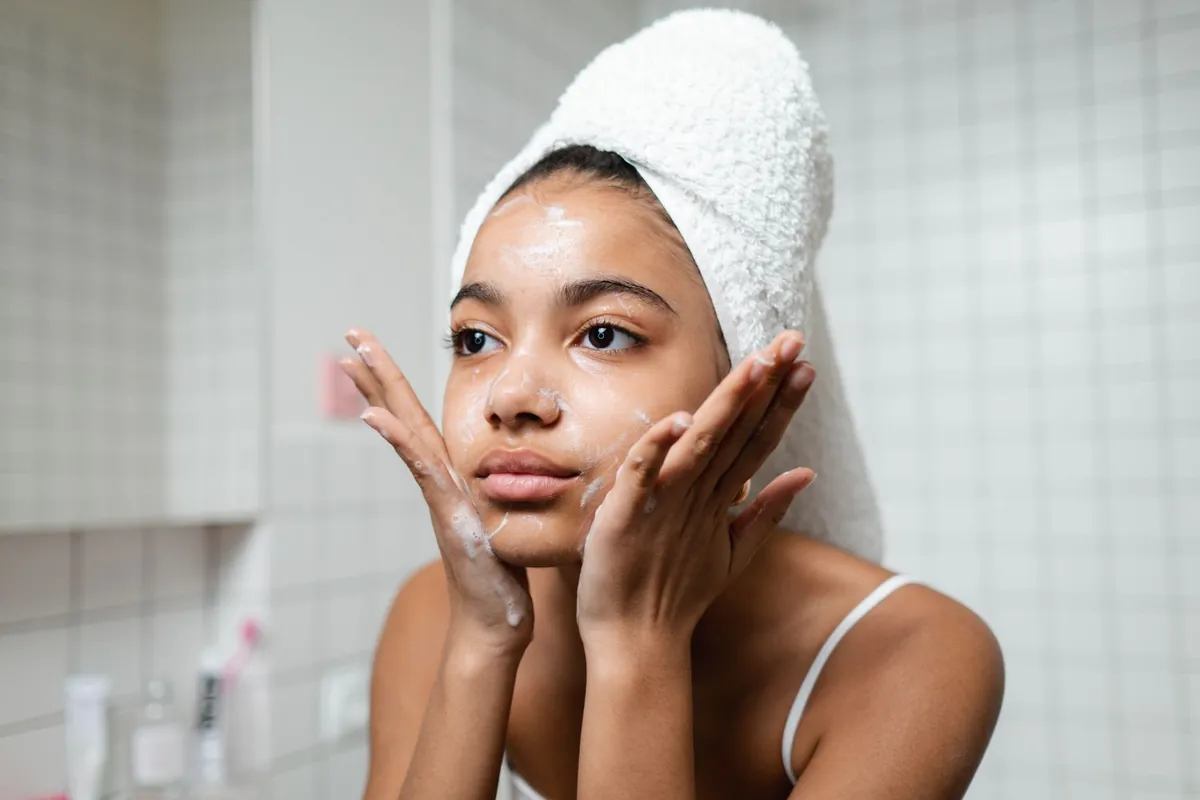
- Remove makeup and cleanse. Makeup and oily residue can interfere with light reaching the skin, as a review of light therapy in skin points out.
- Pat dry and run your session.
- Follow with your evening skincare, including any retinol or other actives, after the session.
Watch out for: falling asleep before you start. Many people find it easiest to do the session straight after cleansing.
Keep blue light earlier in the day
If your mask has a blue mode, timing matters for a different reason: sleep. Harvard Health explains that while light of any kind can suppress melatonin, the hormone that helps you sleep, blue light at night does so more powerfully. In one Harvard experiment, blue light suppressed melatonin for about twice as long as green light of similar brightness. The same article notes that red light is less likely to shift your body clock, and it recommends avoiding bright screens for two to three hours before bed.
With your eyes closed and covered, a mask is not the same as staring at a screen. Even so, a simple rule makes sense:
- Evening sessions: red or red with near-infrared.
- Blue mode: morning or afternoon, and always with the eye covers in place.
If you work nights or shifts
“Morning” and “night” are really about your own sleep schedule, not the clock. If you work nights, treat the start of your waking day as your morning and the time before your main sleep as your night. The same rules apply: red or red with near-infrared before you sleep, and blue mode, if you use it, early in your waking hours. Harvard Health’s advice on light at night specifically includes people who work night shifts, so it is worth keeping bright light away from the hours before you sleep.
Other timing tips
- Once a day at most. If you use your mask in the morning, do not repeat it at night. More sessions do not speed things up.
- Dry skin only. After a shower, make sure your face is completely dry first.
- Same time, same days. Fixed days, such as Monday, Wednesday, Friday and Sunday, are easier to keep than “when I remember”. Our guide to how often to use a red light mask has an example week.
- Switch if it is not working. If you keep skipping morning sessions, move them to the evening, or the other way round. The best time is the one that sticks.
When to use Lumina Pro
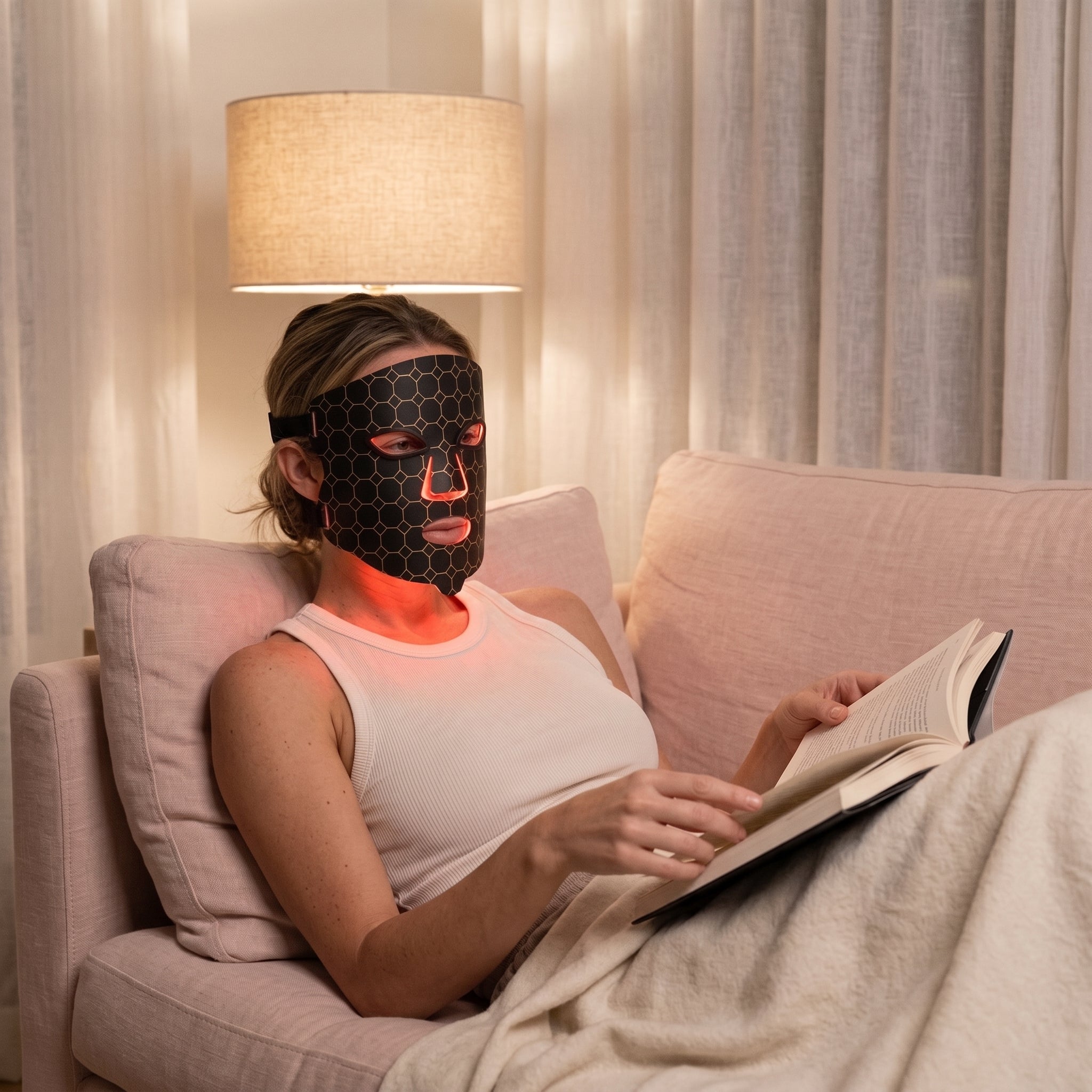
The Rosune Lumina Pro fits either routine. Sessions last 10 minutes on the timer, and it is cordless in use, so you can do them on the sofa in the evening or over breakfast in the morning. Use it on clean, dry skin, apply your skincare afterwards, and keep the clip-in eye covers in, especially in blue mode. Once a day at most, three to five times a week.
Lumina Pro is a general-wellness device and is not FDA-cleared. It costs $149 with free US shipping and a 90-day warranty.
Frequently asked questions
Is it better to use an LED mask in the morning or at night?
Neither has been shown to work better. Choose the time you will stick to. Evening suits most people. If you use it in the morning, finish with sunscreen.
Can I use an LED mask before bed?
Yes. Red and near-infrared modes are the better choice close to bedtime. Harvard Health notes that blue light suppresses melatonin more powerfully than other colors, so keep blue mode for earlier in the day.
Can I use it right after a shower?
Yes, once your skin is completely dry. Use it on clean skin, before serums and moisturizer.
Can I use an LED mask at lunchtime or at my desk?
If your mask is cordless in use, yes. Any time works, as long as your skin is clean and dry and you keep to one session a day.
Can I put makeup on after using an LED mask?
Yes. Run the session on clean skin, then apply skincare, sunscreen and makeup as usual.