Short answer: an in-office LED facial uses more powerful equipment, run by a trained professional, but you pay each visit and need several visits in a course. An at-home LED face mask is lower powered and relies on you to use it regularly, and you pay once, roughly what a handful of salon sessions would cost. If you want the strongest treatment and professional oversight, book the clinic. If you want a gentle routine that fits around your evenings, a mask makes more sense. Some people do both.
How an in-office LED facial works
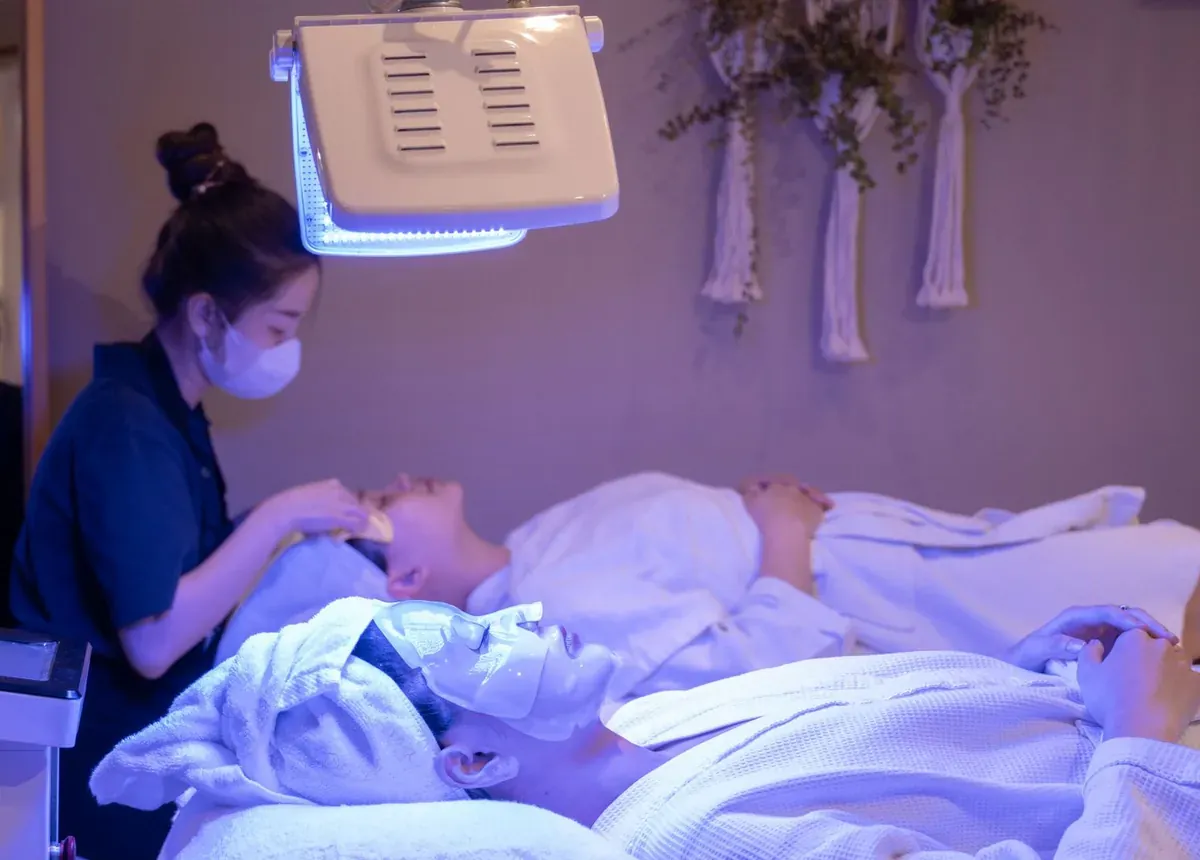
In a clinic or spa, you lie under a large LED panel, usually for about 20 minutes, according to Healthline. It is often part of a longer facial with cleansing beforehand and skincare afterwards. The professional chooses the light color and settings for your skin.
LED facials are usually booked as a course rather than a one-off. Healthline describes up to about 10 treatments, spaced about a week apart, followed by maintenance sessions every few months.
The equipment is the key difference. A dermatologist quoted by Consumer Reports explains that professional devices are more highly powered and are not meant for home use. They need to be run by a licensed professional.
How an at-home LED mask works
An at-home mask is deliberately lower powered, which is what makes it suitable for regular use without supervision. Instead of a few strong sessions, you use it little and often: typically several short sessions a week, following the instructions for your specific mask. Some masks ask for 10 minutes; Consumer Reports notes that others call for much longer sessions.
You do it on your own schedule: on the sofa, in bed, or at your desk. There is no travel and no appointment, but also nobody checking that you are using it correctly. That part is up to you.
Cost compared

Prices vary a lot by city and provider. Consumer Reports puts in-office LED sessions at $25 to $250 each, and Healthline quotes $25 to $85 in some areas. Taking a course of 10 sessions as an example:
| In-office LED facial | At-home LED mask | |
|---|---|---|
| First course or purchase | About $250 to $2,500 (10 sessions at $25 to $250) | One-off, from under $100 to more than $500 |
| After that | Maintenance visits every few months, paid each time | No further cost beyond charging |
| Time per session | About 20 minutes of light, plus travel and the rest of the facial | Often around 10 minutes, at home |
| Who runs it | A trained professional | You, following the instructions |
On cost alone, a mask wins quickly if you would otherwise book regular appointments. But cost is only fair to compare if you would actually use the mask. A mask that sits in a drawer is more expensive than one good facial.
Power and results: an honest comparison
In-office LED is more powerful. Both Consumer Reports and the American Academy of Dermatology say so, and dermatologists often use it as one part of a wider treatment plan. At-home masks trade strength for convenience and frequency.
Neither option comes with guarantees. The AAD describes the research on red light as promising but says more is needed. Consumer Reports adds that, according to the AAD, there is no way to know in advance who will see results from an at-home device. Anyone promising a specific outcome, in a clinic or in a box, is overselling.
One more difference: in a clinic, a professional controls the dose. At home, the dose depends on the mask. A 2026 study that measured four commercial masks found pronounced variability in light output between them. That is a good reason to choose a mask that publishes its specifications.
Convenience and consistency

This is where at-home masks earn their place. Light therapy is gradual, and Harvard Health describes regular use over months. A routine you can keep up matters more than any single session.
- In-office suits people who like a set appointment, enjoy the full facial experience, and do not mind the travel and cost.
- At home suits people with busy or unpredictable schedules, who would rather spend ten minutes on the sofa than an hour including travel.
Safety and supervision
LED light does not contain ultraviolet light and is generally considered safe for home use when used as directed, according to the AAD and Healthline. The main safety advantage of a clinic is supervision: someone trained chooses the settings and handles eye protection.
At home, follow the instructions and use the eye protection provided. Whichever you choose, check with a doctor first if you are pregnant, have a light-sensitive or diagnosed skin condition, take medication that increases light sensitivity (Healthline specifically mentions the acne drug isotretinoin, sold as Accutane), or have an active rash. The AAD also suggests people with darker skin tones speak to a dermatologist before starting, as they can be more sensitive to visible light.
Which is right for you?
Choose in-office LED facials if you:
- want the most powerful treatment available, chosen and supervised by a professional
- are treating a specific skin concern with a dermatologist
- enjoy the salon experience and are happy with the ongoing cost
Choose an at-home LED mask if you:
- want a gentle, regular routine that fits around your life
- would rather pay once than per visit
- are comfortable following instructions and being consistent on your own
Or combine them. Some people book occasional professional treatments and use a mask at home in between. If you do, tell your provider which device you use at home.
Where Lumina Pro fits
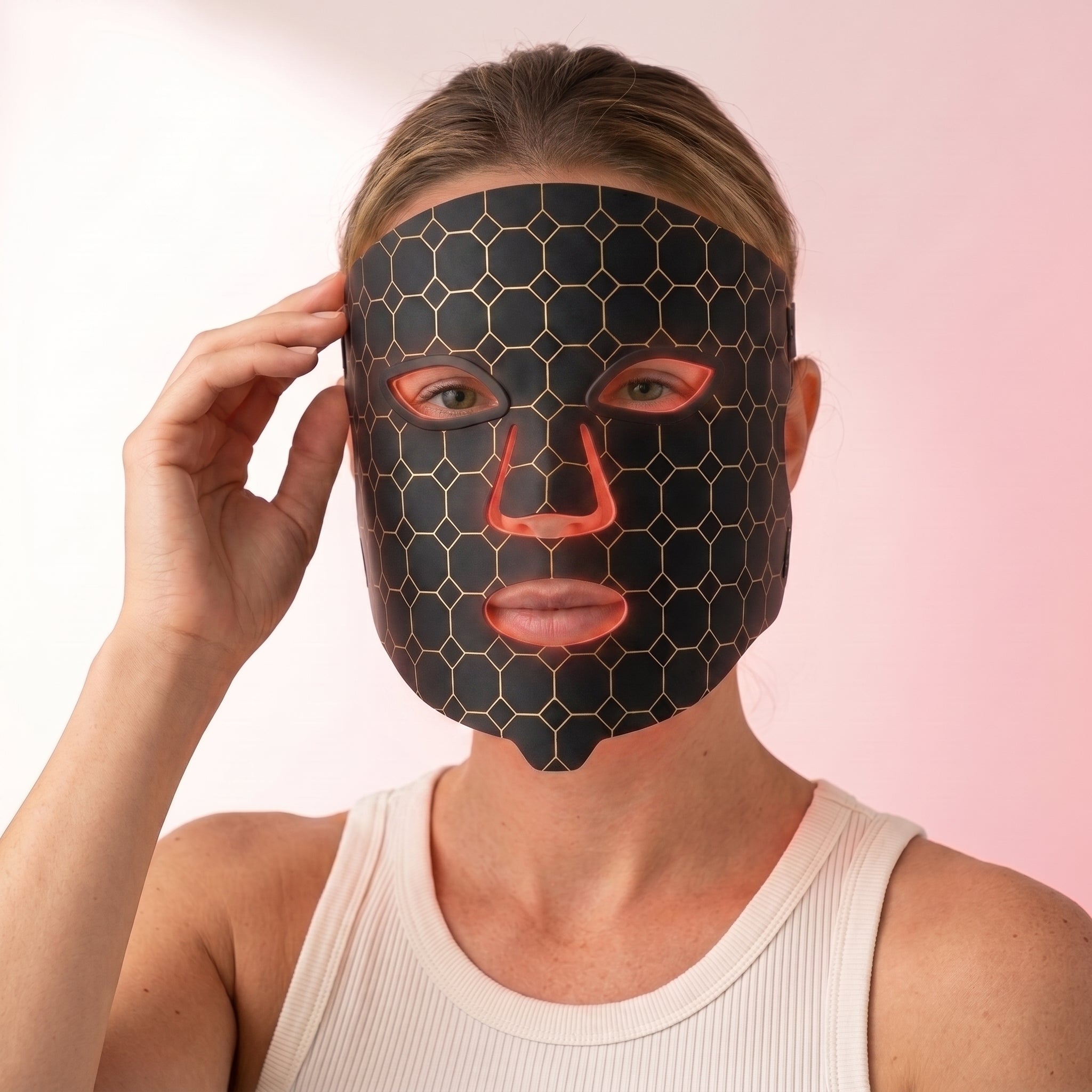
The Rosune Lumina Pro is an at-home mask designed for exactly the “little and often” routine. It uses 660nm red and 850nm near-infrared light, with blue and purple modes. A 10-minute timer switches it off, and clip-in eye covers shade the eyes. The soft silicone body weighs about 168 g, so you can lie back in it. It costs $149, paid once, with free US shipping and a 90-day warranty.
It is a general-wellness device, not a medical one, and it is not FDA-cleared. It will not match the power of clinic equipment, and it is not a substitute for treatment from a dermatologist. Our returns and warranty policy explains what is covered.
Frequently asked questions
How many in-office LED sessions do you need?
It depends on the provider and your goals. Healthline describes courses of up to about 10 sessions, around a week apart, with maintenance every few months.
How much does an LED facial cost?
Consumer Reports puts it at $25 to $250 per session. Prices depend heavily on your area and whether the LED is a standalone treatment or an add-on to another facial.
Can an at-home LED mask replace in-office treatment?
Not like for like. Home masks are lower powered by design. They can be a convenient routine on their own, or sit alongside professional care, but they are not a replacement for a dermatologist’s treatment of a skin condition.
How often should you use an at-home LED mask?
Follow the instructions for your mask. Ours is designed for one 10-minute session a day at most, three to five times a week. See the product FAQ for more.