Short answer: a cheaper LED face mask can be worth it, as long as it gets the basics right. That means the right wavelengths, a built-in timer, eye protection, a comfortable fit, published specifications and a real warranty. Paying more mostly buys more LEDs and coverage, brand track record and, for some masks, FDA clearance and published studies on that exact device. What it does not reliably buy is “better light”, because price turns out to be a poor guide to what a mask actually emits.
What changes as the price goes up
At-home LED masks now sell for anything from under $100 to more than $500. The best-known premium masks cost roughly $400 to $550 as of September 2026, according to price comparisons by Forbes Vetted and other reviewers. Here is what tends to change between price points, and what you can check for yourself:
- Number of LEDs and coverage. More expensive masks often have more LEDs spread across more of the face, and sometimes the neck. More LEDs is not automatically better. What matters is whether the light reaches the areas you care about, evenly.
- Published specifications. Premium brands are more likely to publish wavelengths, light output and session guidance. Many cheaper masks list a wavelength and little else.
- Regulatory status. Some premium masks are FDA-cleared for specific uses. Many others, at every price, are sold as general-wellness devices without clearance.
- Studies on the actual device. A few brands have run clinical studies on their own mask. Most masks rely on research into LED light in general.
- Extras. Apps, extra light colors, cooling panels and neck attachments add cost. They are nice to have, not essential.
- Warranty, returns and support. This varies more by seller than by price. It is worth reading before you buy anything.
Why price is a poor guide to light output
The number that matters most is one you usually cannot see: how much light energy actually reaches your skin in a session. That depends on the mask’s irradiance (light strength, measured in mW/cm²) multiplied by the session time.
A study published in May 2026 in Photochemical & Photobiological Sciences measured four commercial LED masks and compared them with what their manufacturers said. The researchers found “pronounced variability in irradiance” and noted that manufacturers’ documentation lacked data on the energy the masks emit. Because the masks recommended similar session lengths but emitted very different amounts of light, they delivered “markedly different physical doses”.
Harvard Health makes the same point more simply: at-home devices have differing light strengths, which makes it hard to know what exposure you are actually getting. The practical lesson is that a higher price does not guarantee more (or better) light, and a lower price does not guarantee less. Published specifications, and a seller willing to answer questions about them, matter more than the price tag.
The cost per session

A mask is a one-off purchase used many times, so the fairest comparison is cost per session. Assume four sessions a week for one year, which is 208 sessions:
- A $99 mask works out at about $0.48 a session.
- A $149 mask works out at about $0.72 a session.
- A $500 mask works out at about $2.40 a session.
For comparison, a single in-office LED session typically costs $25 to $250, according to Consumer Reports. In-office equipment is more powerful, so it is not a like-for-like comparison. But it shows why at-home masks appeal, and why a mid-priced mask used consistently can be better value than an expensive one that ends up in a drawer.
7 things to check at any price

- Wavelengths are stated. Look for red light around 630 to 660nm, and near-infrared around 830 to 850nm if you want it. Vague terms like “photon light” without numbers are a warning sign.
- Light output is published, or the seller will tell you. Ask for the irradiance in mW/cm² and the distance it was measured at. A seller who cannot answer is telling you something.
- There is a built-in timer. An automatic shut-off keeps sessions to the intended length.
- The eyes are protected. Check for eye cut-outs or covers, and follow what the instructions say about eye protection.
- It will actually be comfortable. If a mask is awkward to wear, it will not get used. Weight, material and straps matter more than they look in photos.
- There is a real warranty and a written returns policy. Know what happens if it stops working, and whether an opened mask can be returned (usually not, for hygiene reasons).
- The regulatory status is clear. If FDA clearance matters to you, check the exact model in the FDA’s 510(k) database rather than relying on a badge.
When paying more makes sense
- You specifically want an FDA-cleared device for a particular use.
- You want a mask backed by a clinical study on that exact device.
- You want extra coverage, such as a neck and chest attachment, or features like an app.
When a mid-priced mask makes sense
- You want to build the habit of a few short sessions a week without spending $500 to find out whether you will stick with it.
- You care most about comfort and ease: something light enough to wear on the sofa, with a timer that handles the rest.
- You want the core wavelengths (red and near-infrared) without paying for extras you will not use.
Whatever you choose, keep expectations realistic. The American Academy of Dermatology describes the research on red light as promising, with results that are gradual and more research still needed.
Where Lumina Pro sits
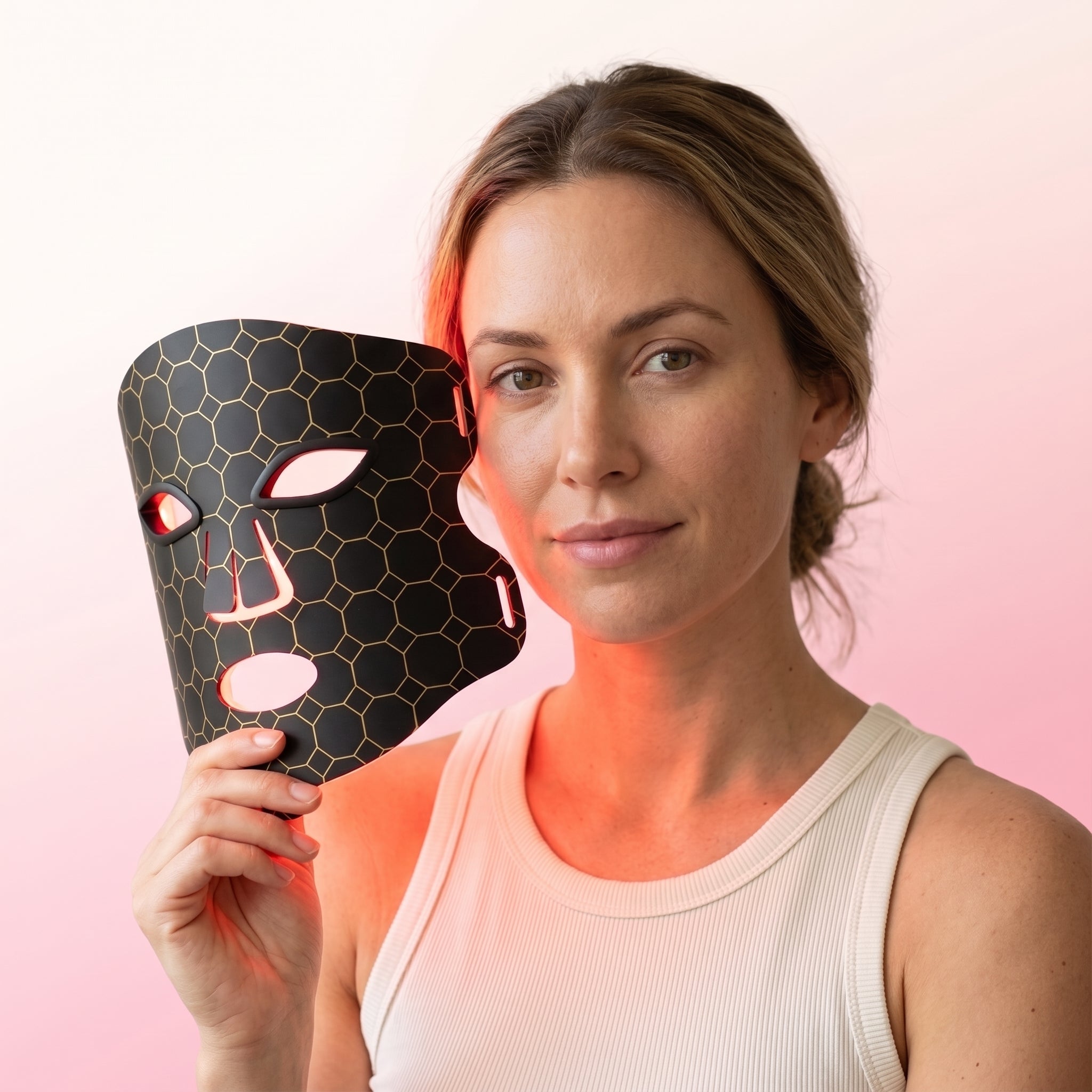
The Rosune Lumina Pro costs $149, which is about $0.72 a session on the example above. Against the checklist: it states its wavelengths (660nm red and 850nm near-infrared, plus blue and purple modes). It has a 10-minute timer, clip-in eye covers and a soft silicone body of about 168 g. It is cordless in use, with a rechargeable controller, and comes with free US shipping and a 90-day warranty.
In the spirit of this article, two honest notes. It is a general-wellness device and is not FDA-cleared. And we have asked our manufacturer for a measured irradiance report, which we will publish on this page when we have it. Our returns and warranty policy sets out exactly what is covered.
Frequently asked questions
Are cheap LED face masks safe?
LED devices are generally considered safe for home use when used as directed, according to the AAD. The bigger risk with very cheap, unbranded masks is not knowing what they emit or who to contact if something goes wrong. Stick to sellers who publish specifications and have a clear warranty.
Do more LEDs mean better results?
Not on their own. LED count says nothing about how strong each LED is or how evenly the light covers your face. Coverage, wavelength and light output matter more than the headline number.
Is a $500 mask five times better than a $100 mask?
There is no evidence that effectiveness scales with price. More expensive masks may offer more coverage, clearance or published testing. But as the 2026 study showed, light output varies widely between masks, and price is not a reliable guide to it.
What is the cheapest sensible way to try LED therapy?
Choose a mid-priced mask that states its wavelengths, has a timer, eye protection and a warranty, and use it consistently for a few months. See our product FAQ for how often to use one.