Short answer: each LED color is a different wavelength of light, and wavelength decides how deep the light travels into the skin. Red (about 630 to 660nm) is the most common and most studied color in home masks. Near-infrared (about 830 to 850nm) is invisible and reaches further. Blue (about 415nm) stays near the surface and needs the most eye care. Purple is usually a mix of colors. Yellow and green appear on some masks but are less studied. Here is what each means and what to watch for.
Why color matters: wavelength and depth
The color you see is the light’s wavelength, measured in nanometers (nm). A widely cited review of light therapy in skin by Avci and colleagues explains the basic rule. Shorter wavelengths, from 390 to 600nm (violet, blue, green, yellow), are used for superficial tissue. Longer wavelengths, from 600 to 1,100nm (red and near-infrared), “penetrate further.” The same review notes that red light penetrates deeper than blue.
So a mask’s colors are not just decoration. Each one reaches a different depth.
Red (around 630 to 660nm)
Red is the backbone of most at-home masks. It is visible, so you can see the mask working, and it features in much of the published research on light and skin. The American Academy of Dermatology describes red light therapy as promising, with gradual results and more research needed. Red is also less likely than blue to disrupt sleep, which makes it the easy choice for evening sessions.
Near-infrared (around 810 to 850nm)
Near-infrared sits just beyond what the eye can see, so a near-infrared LED shows only a faint dull-red glow. It is longer than red and travels further into tissue. A 2020 review describes 600 to 1,100nm as an “optical window” with deeper penetration. Masks often pair near-infrared with red to cover two depths in one session. Evidence that the pairing beats red alone is limited, though: one 2014 controlled trial found no advantage for a broader red-to-near-infrared spectrum over red light alone. Our 660nm vs 850nm guide goes deeper.
Blue (around 405 to 470nm, often 415nm)
Blue has a short wavelength and stays near the surface of the skin. In clinics, dermatologists use blue light as one option for blemish-prone skin, as Consumer Reports explains. Blue also needs the most care:
- Eyes. Blue light carries more energy. There is at least one published case of retinal damage linked to a blue LED mask, and the authors stress keeping the eyes covered. See our eye safety guide.
- Sleep. Harvard Health notes that blue light at night suppresses melatonin more powerfully than other colors. Blue mode is best used earlier in the day.
Purple (a mix)
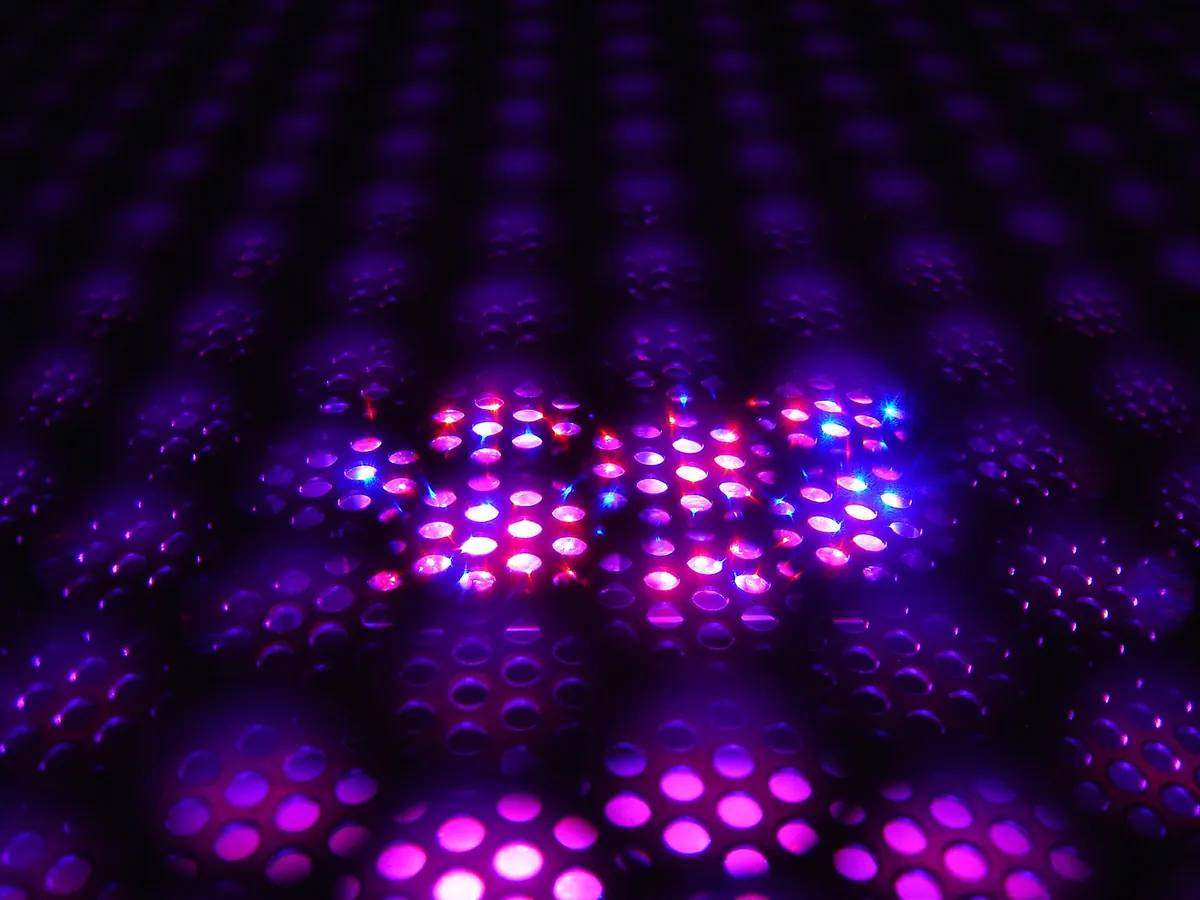
Purple on an LED mask is usually not a single wavelength. It is typically red and blue LEDs running together, which the eye sees as purple. Some masks add near-infrared as well. Because “purple” means different things on different masks, check the product’s specifications or ask the seller exactly which wavelengths the mode uses. And because it includes blue, the same eye and bedtime precautions apply.
Yellow, amber and green
Some masks add yellow or amber (around 590nm) and green (around 520nm). They have been studied far less than red: yellow around 590nm appears in some published studies, green in fewer. Both are shorter wavelengths that stay near the surface. A 2026 study measuring four commercial masks found considerable differences in peak positions for some colors, “such as yellow or violet”. In other words, the color advertised was not always the wavelength delivered. The authors also noted that evidence on the effects of visible light at different doses “remains limited.”
More colors is not the same as better
A mask with seven colors is not automatically better than one with two. What matters more:
- Stated wavelengths. Exact nanometers for each color, not just “blue” or “green”.
- Light output. The 2026 study found pronounced variability in irradiance between masks.
- The colors you will actually use. Most people rely mainly on red.
- Eye protection and a timer, especially if the mask has blue or purple.
Quick reference
| Color | Typical wavelength | Depth | Things to know |
|---|---|---|---|
| Red | 630–660nm | Deeper than blue | Most common and most studied; fine for evenings |
| Near-infrared | 810–850nm | Deepest | Invisible, faint glow; often paired with red |
| Blue | 405–470nm (often ~415nm) | Near the surface | Keep eyes covered; use earlier in the day |
| Purple | Mix (usually red + blue) | Varies | Check what it combines; blue precautions apply |
| Yellow / green | ~590nm / ~520nm | Near the surface | Studied less than red; advertised color may differ from actual |
The colors on Lumina Pro
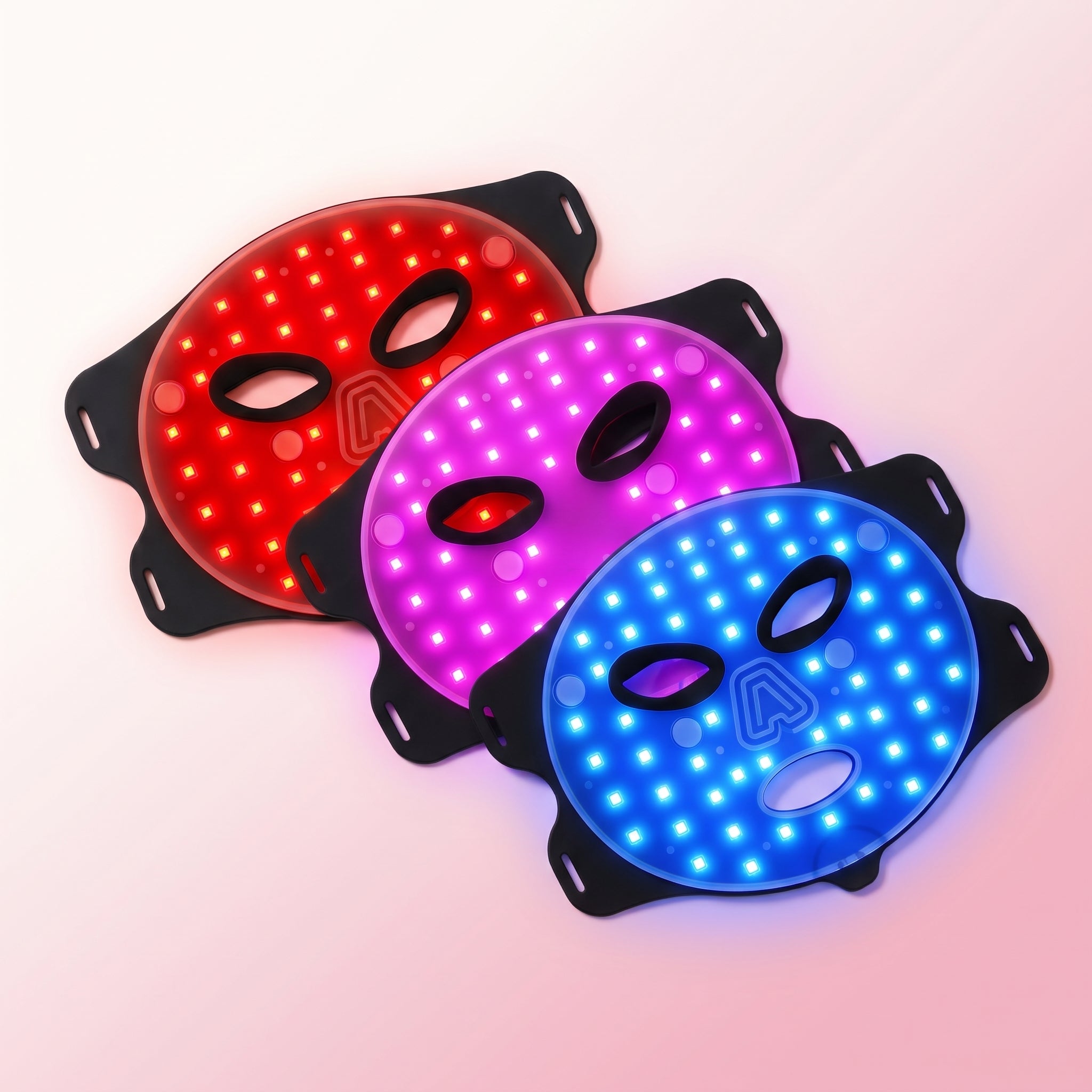
The Rosune Lumina Pro has four modes: 660nm red, red with 850nm near-infrared, blue, and purple. Switch between them with the M button. A 10-minute timer ends each session, and the clip-in eye covers should always be in, especially in blue and purple. Lumina Pro is a general-wellness device. It is not FDA-cleared, and we do not claim that any of its modes treats a skin condition. It costs $149 with free US shipping and a 90-day warranty.
Frequently asked questions
Which LED mask color is best?
Red is the most established choice for at-home masks. Near-infrared is a common addition. Blue and other colors are extras with their own precautions.
What does purple light do on an LED mask?
Purple is usually red and blue running together, sometimes with near-infrared. Check the specifications for your mask, and follow blue-light eye precautions.
Can I use different colors in the same session?
Follow your mask’s instructions. Many masks run one mode per session. Do not stack extra sessions to try more colors; once a day is enough.
Is blue light from an LED mask safe?
Used as directed with the eyes covered, blue mode is widely used. But blue carries more energy, so eye protection matters most in this mode. Ask a doctor first if you have an eye condition.